TPO December 25th, 2025
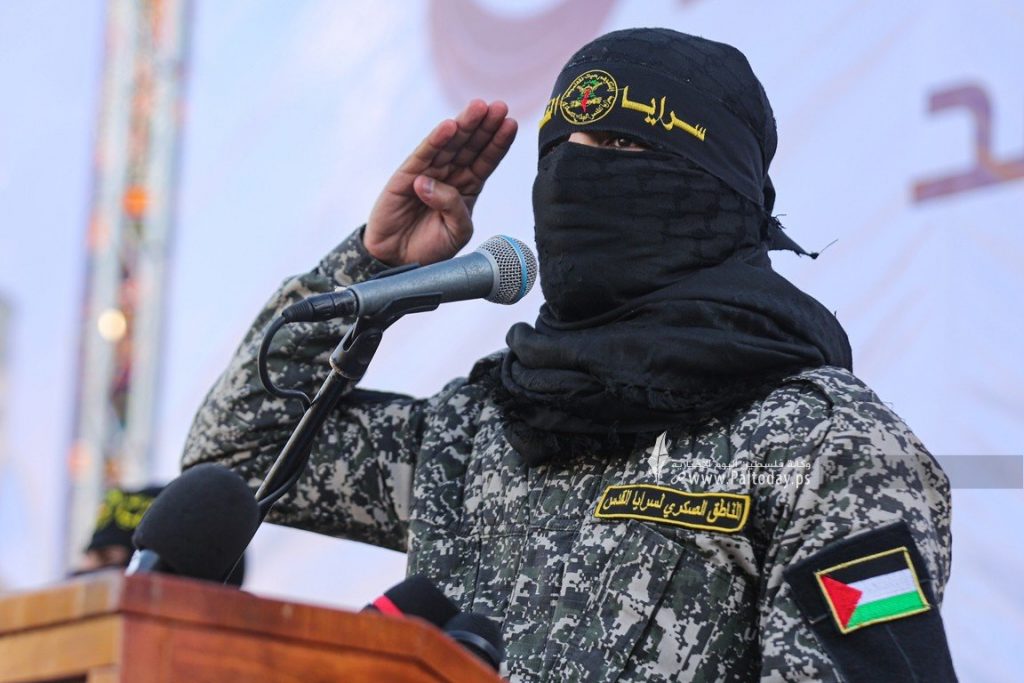
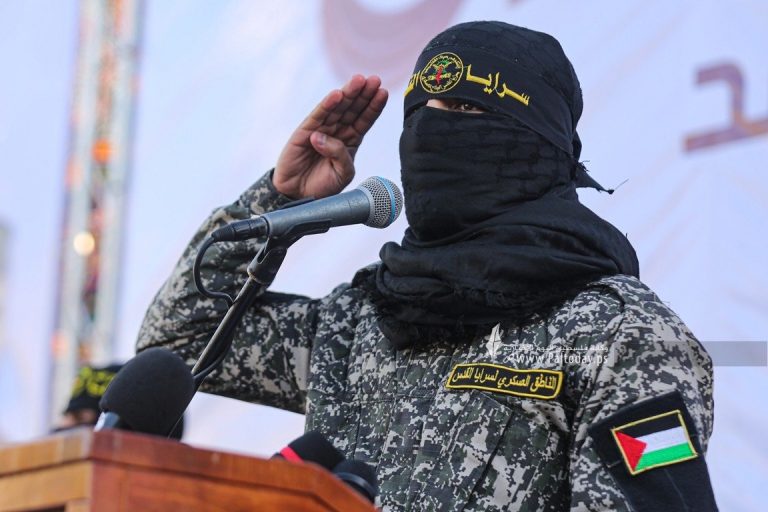
Saraya Al Quds Brigades Spokesman, Martyr, Abu Hamza
The West Bank, alongside Gaza is one of the two entities consisting the State of Palestine, standing in the western bank of the Jordan Valley, the landlocked territority is split up between the three areas: A, B, C, as per the Oslo Accords II.
Area A is de jure controlled by Fatah’s Palestinian National Authority (PNA), area B is controled by both Palestinian Authority and Israeli authorities, meanwhile area C is solely under occupation of Israeli authorities, consisting of 60% of the total area.
Since the ratification of the wicked Oslo Accords, and de jure declaration of a “Palestinian State”, the Palestinian Authority officially controls a geographically non-contiguous territory comprising approximately 11% of the West Bank, known as Area A, which remains subject to Israeli incursions.
The West Bank remains central to the Israeli–Palestinian conflict, as Palestinians consider it the heart of their envisioned state, along with the Gaza Strip and extremist Israelis see it as their ancestral homeland, with numerous jeiwsh biblical sites being located there.
As of 2022, there are over 450,000 Israeli settlers living in 132 settlements in the West Bank excluding East Jerusalem, with an additional 220,000 settlers residing in 12 settlements of East Jerusalem.
In addition, there are over 140 Israeli outposts in the West Bank that are not recognized and are therefore illegal even under Israeli law, but which have nevertheless been provided with infrastructure, water, sewage, and other services by israeli occupation authorities even though they are illegal outposts.
All Israeli settlements on the West Bank are illegal under international law, and recognized as such. In 2002, the European Union as a whole declared all Israeli settlement activities to be illegal and close to last months, many european countries including Netherlands and Spain have banned import of products from zionist settlements.
In January 2012, the European Union approved the “Area C and Palestinian state building” report. The report confirmed that Palestinian presence in Area C has been continuously undermined by Israel and that state building efforts in Area C of the Palestinian Authority (PA) and the EU were of utmost importance in order to support the creation of a contiguous and viable Palestinian state.
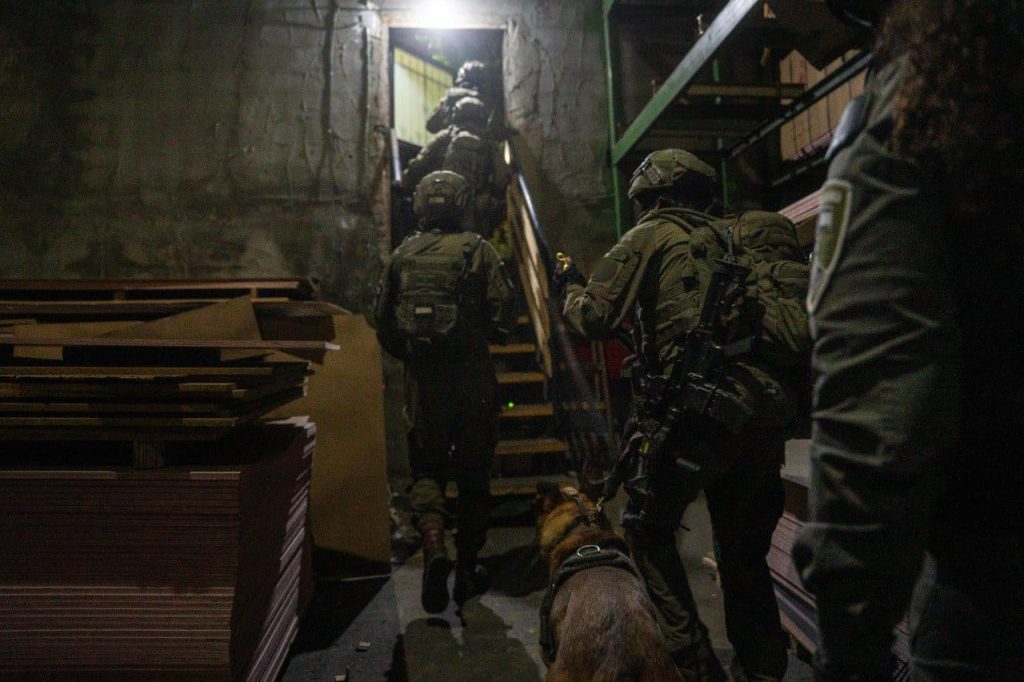
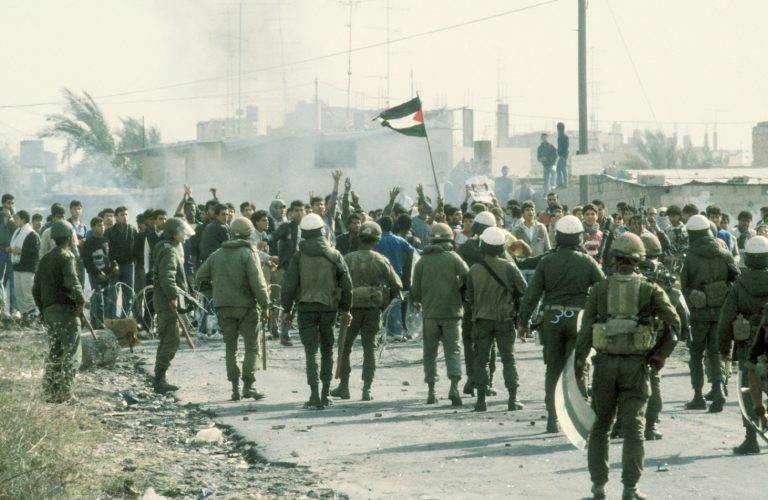
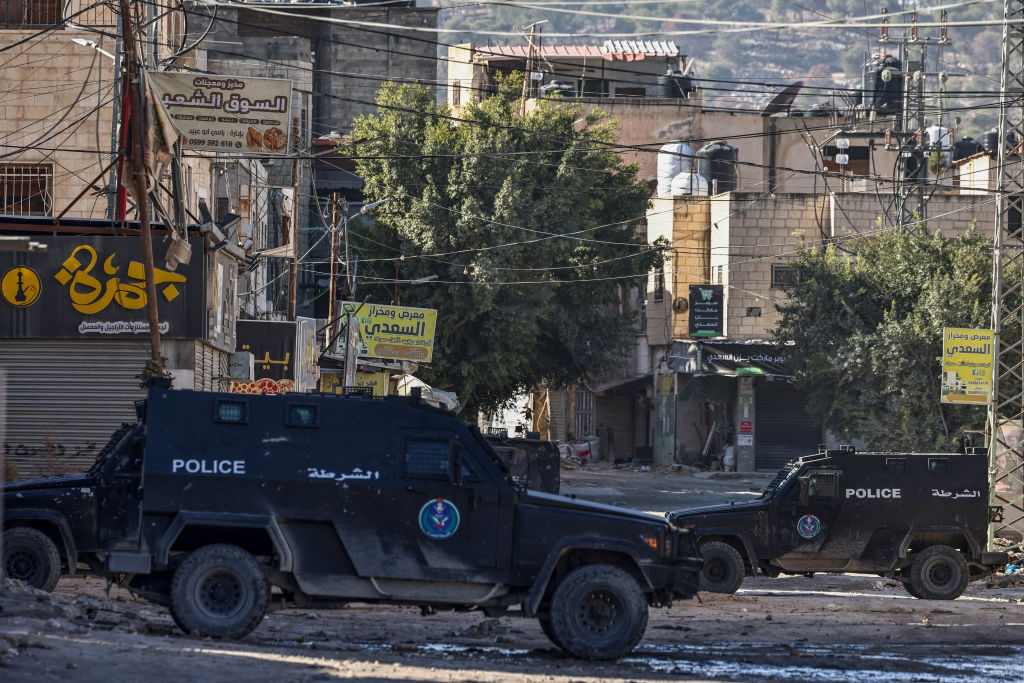
Israeli Occupation Forces raiding resistance positions in West Bank.
Israel has been found of major violations of international human rights law, including collective punishment, in its administration of the occupied Palestinian territories. Israeli settlers and civilians living or traveling through the West Bank are subject to Israeli law, and are represented in the Knesset; in contrast, Palestinian civilians, mostly confined to scattered enclaves, are subject to martial law and are not permitted to vote in Israel’s national elections. This two-tiered system has caused Israel to be accused of committing apartheid, a charge that Israel blatantly rejects entirely.
Israel’s vast military superiority, with a modern army and air force, compared to the Palestinian use of guerrilla tactics, has led to accusations of war crimes on both sides, with Israel being accused of disproportionality and the Palestinians accused of indiscriminate attacks
West Bank Palestinians have engaged in two uprisings that have represented an asymmetric set of wars of attrition, between the occupying power and the occupied people.
This characterization has been further refined by classifying the conflict as structurally asymmetric, where the root cause of tension lies in the standoff between a colonizer and the colonized, and in which the large power imbalance in favour of the dominator leads to a resort to guerilla tactics or “terrorism” by the dominated. Making speeches calling on fellow Palestinians to resist the occupation is construed in Israeli law as tantamount to advocacy of “terrorism”.
The two fundamental preconditions for containing conflict – clearly defined borders and rough power parity between the parties at war – are absent, with a pronounced economic and military disparity favouring Israel. The disparity extends even to the numerous negotiations over a peace settlement.
The Israeli techniques for daily dispersing protesting crowds differ according to the ethnicity of the protestors. With Jewish settlers by and large the methods are those policing approaches used in Western countries, and they are reported as not intervening when settlers go on the rampage against Palestinians. With Palestinians, contrariwise, military tactics are adopted, and observers such as B’Tselem claim lack of proportionality and recourse to firearms is characteristic.
With the latter at demonstrations Israeli forces have drawn on rash gas, tear gas canisters (which have often produced fatalities); shooting into crowds with rubber-coated steel bullets, which can be lethal; high-velocity bullets; recourse to the use of live ammunition rounds; the deployment from 2008 of trucks dousing whole areas with putrid Skunk spray; stun grenades; water cannons; pepper spray; capsaisin projectiles; deployment of snatch squads and mista’arvim and sponge rounds.
The use of rubber-coated metal bullets is allowed in the West Bank but forbidden from deployment against people within Israel. Also deployed on occasion since 2005 when they were used at Bil’in, are loud sound-wave generating devices, gravel-throwing machines; shock inducing polystyrene and bismuth metal paintball pellets, and tasars. In the first Intifada, snipers targeted youths primarily to maim them, with dum dum shots to the right arm biceps crippling their use by stone-throwers for life.
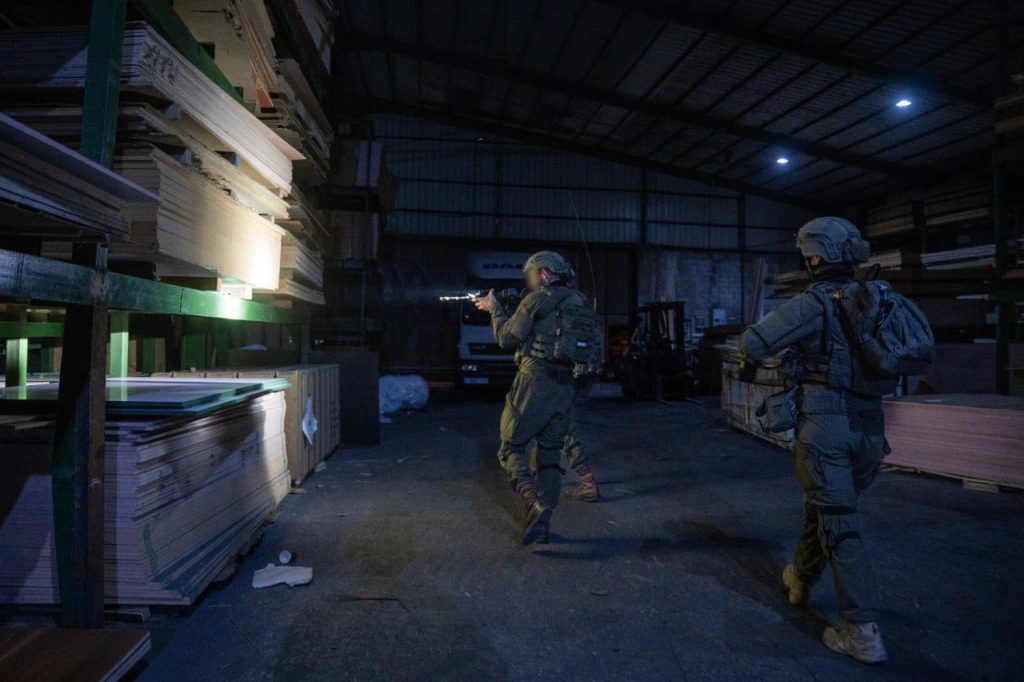
Israeli Occupation Forces aiding resistance positions in West Bank
The primary value developed by Palestinians to resist the occupation from 1967 has been ṣumūd, hanging on stubbornly, a steadfast perseverance in remaining on one’s land, even if it turns into a prison, in the face of Jewish hitnahalut (settlement). Mubarak Awad, founder of the Palestinian Centre for the Study of Nonviolence, pushed for Gandhian principles of non-violence in the West Bank, and was subsequently expelled and sent into exile by Israel on claims that he was preaching non-violence only as a cover for an armed struggle for liberation.
The village of Bil’in, one of the first villages, along with Budrus and Abu Dis, to practice Gandhian methods of non-violent resistance, has in one decade (2005–2015) been subjected to incessant night raids, seen hundreds of its residents arrested, its leader Abdullah Abu Rahmeh put on trial five times and sentenced to imprisonment, and thousands of demonstrators injured.
A spiral in escalation led to the increased use of knifing and Palestinian suicide attacks corresponding to the expansion of deployment of warplanes, helicopters, and recourse to assassinations by Israel.[210][be] In the Al-Aqsa Intifada, suicide bombers, among which youths figured prominently, were deployed and became a central feature from 2001 to 2005, of the second uprising.
Aside from the PLO’s Fatah, many armed militant factions, Marxist, Islamic or otherwise, became involved, such as the Tanzim, the al-Aqsa Martyrs’ Brigades, Hamas, Islamic Jihad Movement in Palestine, the Popular Front for the Liberation of Palestine, the Democratic Front for the Liberation of Palestine, and Popular Resistance Committees.
This flared up into a large-scale military confrontation when, according to Ma’ariv, 700,000 rounds of ammunition were fired at West Bank crowds protesting the shooting of Palestinians in and around the Haram al-Sharif, killing 118 Palestinians, of whom 33 were teenagers.
From 2001 to 2007 Israel killed more Palestinians annually than it had over the first two decades of occupation, averaging 674 as opposed to the earlier 32 per year. Kill ratios between the first and second intifada differ markedly. One Israeli was killed for every 25 Palestinians in the first, whereas the figure for the first year of the second the ratio varied from one Israeli to 2.5/3 Palestinians. The earlier ratio of 25:1 was only reestablished by 2007.
Freedom of movement has been strictly contigented by israeli occupation authorities, effectively restructuring palestinian lands into land cells, freezing the flow of everyday palestinian lives. Occupation authorities built 180 miles of bypass roads in the territories, on appropriated land because they ran close to Palestinian villages. The justification was protection of settlers from alleged palestinian sniping, bombing and by shootings.
A large number of embankments, concrete slabs, manned checkpoints, mounds, trenches, iron gates, fences, and walls impede movement on primary and secondary roads. The result was to divide and fragment Palestinian townships, and cause endless obstacles to Palestinians going to work, schools, markets and relatives. Women have died or had miscarriages while waiting for permission at a checkpoint to go to hospital.
In the village of Kafr Qaddum, soldiers from the Nahal Brigade planted explosive devices on a tract of land where demonstrators gather, as a “deterrence” measure but they were removed when a 7-year-old child was injured playing with one.
The village closure policy imposed by israeli occupation forces operates on the basis of a pass system developed in 1991, and is divided into two types: a general closure restriction the movement of goods and people, except when a permit is given, from and to Israel and the West Bank and Gaza, developed in response to a series of stabbings in the former 1993, and the implementation of total closure over both areas.
Aside from general closures, total closures were imposed for over 300 days from September 1993 after the Declaration of Principles of the Oslo I Accord and late June 1996.
The strictest total closure was put in place in the spring of 1996 in the wake of a series of the suicide bombings executed by Hamas in retaliation for the assassination of senior hamas leader Yahya Ayyash, when the Israeli government imposed a total 2-week long ban on any movement by over 2 million Palestinians between 465 West Bank towns and villages, a measure repeated after the deadly clashes arising from the archaeological excavations under the Western Wall of the Haram al Sharif.
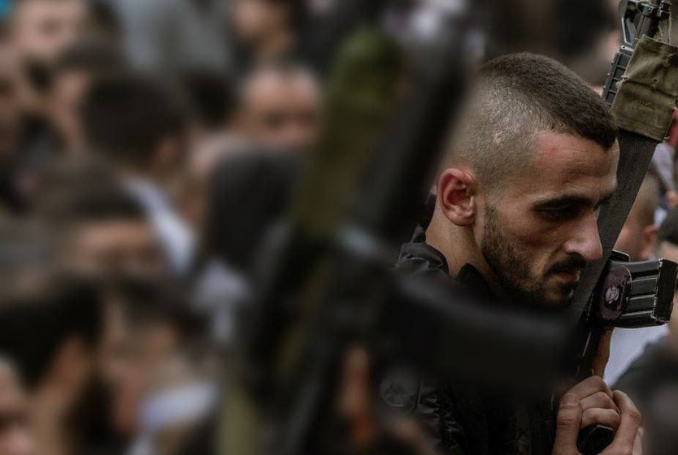
Palestinian leader and founder of PIJ’s Tulkarm Brigade, Martyr, Abu Shujaa.
The entire Palestinian population is kept under surveillance, regardless of intelligence concerns, using smartphones and CCTV cameras, some capable of seeing into homes, whose photos are then fed into the IDF’s “Blue Wolf” tracking system, endowed with facial recognition technology.
This is a pared down version of Wolf Pack, a computer data base containing “profiles of virtually every Palestinian in the West Bank, including photographs of individuals, their family histories, education and a security rating for each person.” The deployment of such systems is banned in Israel.
IDF soldiers on West Bank checkpoint duty are not allowed to end their shifts until they have filled their quota of 50 photos of Palestinians passing the checkpoint, and details concerning them. Settlers have a parallel smartphone app, White Wolf, for scanning Palestinians. On top of this, military drones and balloons, as well as the invasive Pegasus spyware developed by NSO Group for penetrating smartphones, form part of Israel’s West Bank surveillance system.
Israel began to count all items in households from televisions to refrigerators, stoves down to heads of livestock, orchards and tractors. Letters were checked and their addresses registered, and inventories were drawn up of workshops producing furniture, soap, textiles, sweets and even eating habits. While many innovations were introduced to improve workers’ productivity, they can also be seen as control mechanisms.
While the Israeli public thinks, he stated, that this surveillance is focused on “combating terrorism”, in practice a significant amount of intelligence gathering targets innocent people with no record for militancy. No Palestinian is exempt from non-stop monitoring.
Israel’s use of collective punishment measures, such as movement restrictions, shelling of residential areas, mass arrests, and the destruction of public health infrastructure violates Articles 33 and 53 of the Fourth Geneva Convention. In 2016 Amnesty International stated that the various measures taken in the commercial and cultural heart of Hebron over 20 years of collective punishment have made life so difficult for Palestinians that thousands of businesses and residents have been forcibly displaced, enabling Jewish settlers to take over more properties.
From the outset of the occupation of the Palestinian territories down to 2015, according to an estimate by the ICAHD, it has been estimated that Israel has razed 48,488 Palestinian structures, with a concomitant displacement of hundreds of thousands of Palestinians.
Israel regards its practice as directed against houses built without Israeli permits or a form of deterrence of “terrorism”, since a militant is thereby forced to consider the effect of his actions on his family. Between September 2000 and the end of 2004, of the 4,100 homes the IDF razed in the territories, 628, housing 3,983 people were undertaken as punishment because a member of a family had been involved in the Al Aqsa insurgency.
According to Major General Tal Russo, the IDF undertakes operations “all the time, every night, in all divisions.” Israeli night raids are usually undertaken between 2 am and 4 am. The units, whose members are often masked and accompanied by dogs, arrive in full battle gear and secure entry by banging on doors or blowing them off their hinges. Surging blips in frequency may relate to rotation of new units into an area. Most occur in villages in close proximity to settlements.
Such missions have several different purposes: to arrest suspects, conduct searches, map the internal structure of a dwelling, and photograph youths to improve recognition in future clashes. Laptops and cellphones are often seized, and, if returned, not infrequently damaged. Vandalism is commonplace, with looted objects given to needy soldiers or those on low pay, as in Operation Defensive Shield.
Reports of stashes of money that go missing after a search are frequent. Many personal effects – photos of children or families, watches, medals, football trophies, books, Qur’ans, jewelry – are taken and stored away, and, according to one informant, intelligence officer trainees were allowed to take items of such Palestinian memorabilia, called from storerooms.
According to Lisa Hajjar and Rachel Stroumsa, the director of the Public Committee Against Torture in Israel, torture has been an abiding characteristic of Israeli methods of interrogation of Palestinians. Israeli border police have been witnessed forcing Arabs to sing the Israeli national anthem, slap each other’s faces and crawl and bark like dogs. The police have also arrested thousands of Arabs each year on “security” charges, which have ranged from outright terrorism to simply reading blacklisted books.
Coverage by Western and International media on the conflict and opression of palestinians is insufficient, and mostly than not limited. Coverage is often, biased, redacted and full of pressure from political and economical interests highlighting material power rather than collective consciousness.
Such affects the usage of terminology and distortion of facts. Throughout the last agression on Gaza, Israel’s war on journalism has been depicted as a serious issue, a violation of human rights, norms, laws and what counts on earth. At least 300 journalists have been killed or assassinated, highlighting israel’s war on facts and awareness on its crimes.
About the Author