TPO January 30th, 2026
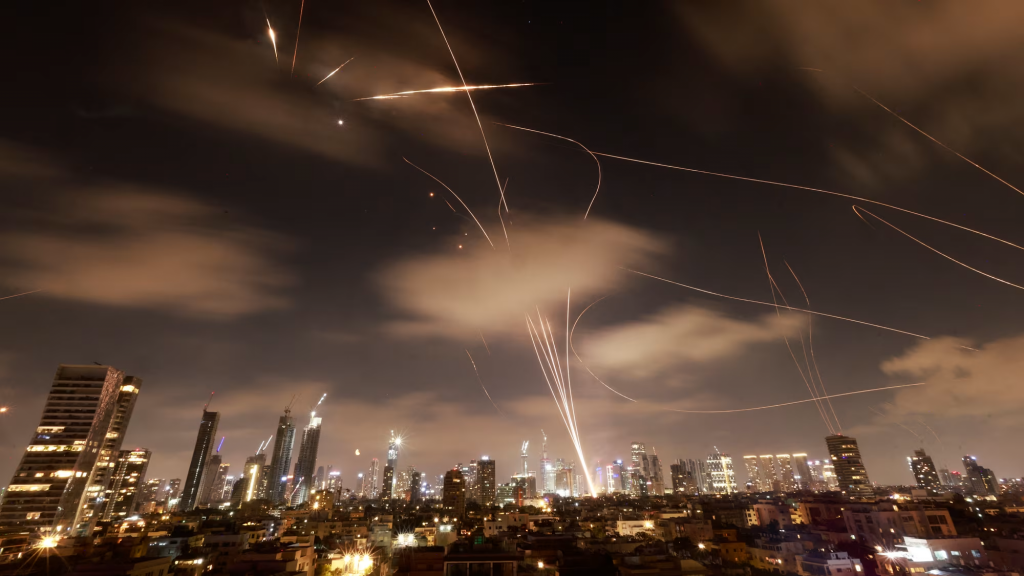
The Iran–Israeli War , also known as the 12-Day War , was an armed conflict that began with a series of preemptive attacks by Israel on Iran on June 13th 2025. Israeli forces assassinated several senior Iranian military commanders, nuclear scientists, and politicians, and damaged or destroyed Iranian air defense systems and some nuclear and military facilities. In response, Iran fired missiles at Israeli military bases and cities. The Yemeni based Houthis also fired several missiles at Israel.
In addition to defending Israel against Iranian missiles and drones, on the ninth day of the war, United States Air Force launched strikes in Iranian nuclear sites . The Houthis considered the US attacks a “declaration of war” and unilaterally broke their ceasefire with the United States . Iran and Israel finally agreed to a bilateral ceasefire on 3 July, mediated by the United States and Qatar.
Israel’s military operations targeted and eliminated many of Iran’s Military leaders, including IRGC’s General Hossein Salami, Chief of Staff of Iran’s armed forces, Mohammad Bagheri, senior commander Gholam Ali Rashid, IRGC Aerospace Force commander, Brigadier General Amir Ali Hajizadeh and other senior Quds Force and IRGC leaders. Israeli occupation authorities claimed that those strikes were aimed at debilitating Iran’s strategic military command and its missile and nuclear infrastructure.
Israeli occupation military sources also said that 11 senior Iranian nuclear scientists were assassinated during the campaign, as “part of efforts to disrupt Iran’s nuclear work”. These scientists were described as being involved with nuclear weapons research and related programs. Among the most prominent is Ali Bakouei, a nuclear scientist reportedly killed in Tehran on the first day of the conflict.
In the early hours of the first day, june 13th 2025, the israeli occupation forces attacked dozens of iranian military bases and infrastructure installations. By 05:30 AM, the Israeli Air Force (IAF) had launched five waves of air strikes, using more than 200 fighter jets to drop more than 330 munitions on about 100 targets. Israeli targets included the Natanz Nuclear Facility and other infrastructure of Iran’s nuclear program, with no nuclear accidents occurring as a result of the airstrikes.
Meanwhile, Mossad operatives and commando forces sabotaged Iran’s air defense systems and missile infrastructure. An Israeli official said the Mossad had smuggled precision weapons and established a covert drone base near Tehran, which were used to disable air defenses, securing air superiority for Israeli aircraft. The operations in the early hours, which killed 30 Iranian generals in minutes as well as nine nuclear scientists, are referred to as Operation Red Wedding and Operation Narnia.
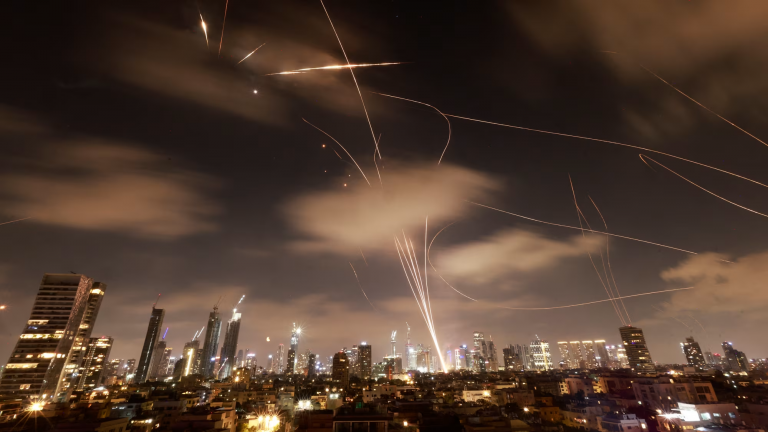
Shortly thereafter, Iran launched missiles and drones at military bases and air bases under the codename Operation True Promise III. These included more than 100 Shahed drones. The US evacuated some of its troops from in Iraq and also authorized the evacuation of family members of US troops across the region. Although missiles were intercepted, Iran managed to hit targets in Tel Aviv including the Kirya military headquarters near Begin Road.
Sirens were even activated in Amman, Jordan’s capital. Some drones were intercepted by the Royal Jordanian Air Force in Jordanian air space, some by the occupation air force over Saudi Arabian and Syrian airspaces. An intercepted drone fell on a house and wounded three people in Irbid, Jordan.
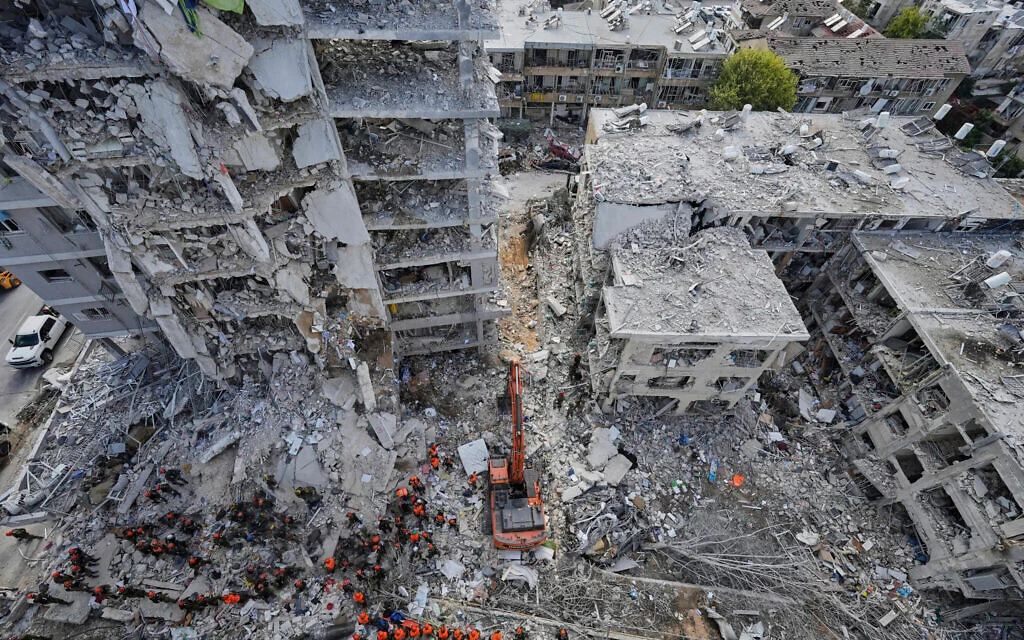
Al-Mayadeen reported that Iranian missiles struck a nuclear energy research facility in Tel Aviv. The Israeli military prohibited the public from sharing photos and videos featuring the damage and destruction that resulted from the Iranian missile attack.
In the early morning of June 14th, Iranian media reported an explosion and subsequent fire at Tehran’s Mehrabad International Airport. It also reported Iranian air defences engaging Israeli projectiles above Isfahan and exchanging fire with Israeli drones on reconnaissance missions in northwestern Iran. The IDF later said that it bombed an underground facility in western Iran used to store ballistic and cruise missiles.
Iran confirmed the deaths of General Gholamreza Mehrabi and General Mehdi Rabbani and claimed to have downed three Israeli F-35 jets, captured two pilots, and killed a third, but the IDF repeatedly denied the claims. Iran’s Ministry of Petroleum announced attacks on two oil fields in Bushehr province, where fires halted the production of gas. The Red Crescent Society said Israel had attacked 18 of the 31 provinces of Iran.
On the morning of June 15th, Iran and the Houthis launched ballistic missiles simultaneously, striking buildings in Bat Yam and Rehovot, and a mall in Kiryat Ekron and in Tel Aviv. In Bat Yam, 61 buildings were damaged according to Mayor Tzvika Brot. Nine people were killed and about 200 were injured according to the MDA.
In Rehovot, Iranian missiles struck the Weizmann Institute of Science, and dozens of other buildings were also damaged. The IDF reported that central Israel was attacked by missiles coming from Yemen, which was later confirmed by the Houthis, stating that they fired Palestine 2 ballistic missiles in coordination with the Iranian military. Debris from Iranian missiles also hit two sites in the West Bank.
A Shahab-class missile caused a rooftop fire in al-Bireh, close to the house of President Mahmoud Abbas of the Palestinian Authority. Three children were wounded outside Sa’ir by debris from an intercepted missile.
On June 16th, Israeli occupation aviation hit the command centre of the Quds Force in Tehran. “Iran International” claimed explosions were heard in the vicinity of the Fordow nuclear facility. IDF strikes were said to have taken place in the vicinity of the Parchin military installations.
Iran launched another barrage of missiles against Israel and fragments were reported to have caused damage to the US Embassy Branch Office in Tel Aviv. A school in Tel Aviv as well as homes in Bnei Brak, Haifa and Petah Tikva were hit. Eight civilians were killed and over 90 were injured. Israel reported 287 people were hospitalized overnight. Haifa’s oil refinery was also targeted, causing significant damage and killing three workers.
According to Quincy Institute for Responsible Statecraft executive vice president Trita Parsi, successive Iranian missile attacks may have eroded Israeli defenses, allowing a larger percentage of missiles to get through than before. Following the attacks, Israel confirmed 24 fatalities to date, the majority of which occurred outside bomb shelters. Additionally, a drone fired toward the US consulate in Erbil, Iraq, was intercepted. Iran fired ballistic missiles at Petah Tikva again, killing four people and injuring 15 people. Among the victims was Holocaust survivor Ivette Shmilovitz. Two missiles also hit Tel Aviv, destroying a number of buildings.
Tehran being bombed
On the 22nd, according to occupation forces, 20 fighter jets conducted overnight strikes on dozens of military targets in central Iran, including weapons production and storage sites, air defenses, and infrastructure at Isfahan International Airport. In the morning, the IDF said that it destroyed two Iranian F-5 fighter jets at Dezful Airport alongside eight ballistic missile launchers, killing nearby soldiers. Strong explosions were heard in Tehran, Isfahan and Bandar Lengeh, with Iranian air defense systems being activated.
Iranian media reported that an Israeli Hermes 900 drone was shot down by Iranian air defense. The Iranian media also reported that Majid Masibi, who the Islamic Republic authorities found guilty of “spying for Israel”, had been executed.
Iran launched 27 missiles at Israel in two barrages with 11 sites being hit, spanning from the occupied Golan Heights and Upper Galilee, to the northern and central coastal areas of Israel with extensive damages being reported in Tel Aviv and Haifa. 86 people were injured in the strikes. Thirteen people were lightly injured when a strike hit a building in Tel Aviv, and six others were hurt in Ness Ziona. A man was moderately hurt on Route 431 near Be’er Ya’akov. An undetected Iranian missile also hit a public square in Haifa, lightly injuring three people.
On June 22nd, the United States joined the war on Israel’s side and struck the Fordow, Natanz, and Isfahan nuclear sites, using B2 bombers and Tomahawk missiles. President Trump said that the targeted facilities were “totally obliterated” and Iranian government said that the Fordow site was not seriously damaged. IRIB said that only Fordow’s exit and entry tunnels were destroyed but not the facility itself. Later on, however, Iranian Foreign Minister Abbas Araghchi admitted that nuclear sites sustained severe damage.
Although initial U.S. intelligence assessments indicated that the U.S. airstrikes did not destroy Iran’s nuclear capability and only delayed it for a few months, the Pentagon has since concluded that it set back Iran by one to two years. Satellite images of Fordow facility were released by the Associated Press shortly after the strikes, showing damage to the entrances of the facility which are blocked by dirt, and also several large holes/craters in the mountain which the facility is under.
Iran launched 15 missiles toward Israel with shrapnel from Israeli interceptors falling in several cities. Explosions were heard in Jerusalem, causing sirens to sound for 30 minutes. The IDF said that the attack consisted of five separate barrages.
The Israel Electric Corporation said that power disruptions were caused in southern Israel after a missile struck close to a strategic infrastructure facility. Iranian media reported that the rocket attacks were organized by the IRGC and impacts were reported in five locations including Safed, Tel Aviv, Ashkelon, Ashdod, and Beisan, while Israeli media reported four explosions including one in Ashdod and Tel Lachish, south of West Jerusalem, however the total amount of impacts is unclear due to Israeli military censorship.
The IAF hit targets in Tehran with airstrikes during the night of June 18th. In the morning, Israel hit dozens of military facilities in Iran allegedly including air defense and missile production sites.
In the early morning, Iran fired a barrage of around 20 ballistic missiles at Israel, striking at least four sites in central and southern Israel, including the Soroka Medical Center in Beersheba, Tel Aviv, Ramat Gan, and Holon.
According to Israel’s Ministry of Health, 271 people were injured, and a Soroka hospital spokesperson reported significant damage to the hospital. A cluster bomb was also used in the attack, with one hitting a home in Azor.
Iranian ‘Khyber’ missiles being launched towards Tel Aviv
As a response to the american attack, on June 23rd, Iran launched at least six missiles on the American Al Udeid Air Base in Qatar with explosions being reported over Doha. It called the attack “Operation Annunciation of Victory”. According to Qatari officials, the missiles targeting Al Udeid were intercepted and no casualties occurred. Reportedly, Iranian authorities also informed the Americans before the attack, giving them time to move the troops.
Around 50 Israeli warplanes conducted extensive strikes in Tehran, dropping over 100 munitions in the span of two hours. Locations hit reportedly included the Basij headquarters, Evin Prison and the Palestine Square Countdown Clock. The strikes hit the entrance of Evin prison. Iranian sources said that Israel struck an electric station in Evin, causing power cuts, and Shahid Beheshti University, although the university itself denied it. A spokesperson for the Iranian judiciary later said that at least 71 people had been killed in the attack on Evin prison.
The IDF said that 50 fighter jets struck around 20 buildings in Tehran, including factories producing raw materials, components and manufacturing systems for ballistic missiles.
Iranian media said that the IDF struck an IRGC-affiliated university and a missile factory in Khojir. The IDF claimed it had destroyed 70 missile batteries. Israel also attacked nuclear centrifuge production sites, with the IAEA confirming strikes on Karaj’s TESA Complex and the Tehran Research Complex.
In the morning, Israel hit sites in Tehran and issued an evacuation order for people in district 18 of Tehran. Iran’s internal security headquarters was allegedly destroyed during the attacks, according to Israel. An Iranian Red Crescent building was also reportedly struck. Iranian media reported that Iranian forces shot down a “hostile” F-35 jet in the Javadabad area of Varamin.
In the afternoon, the IDF said that it had struck 40 military targets in western Iran, including a primed Emad missile launcher, missile storage sites, and soldiers, with 25 fighter jets.
He added that five AH-1 helicopters were struck in Kermanshah in the morning. Later, the IDF said that it destroyed three more AH-1 helicopters.
The IDF later announced that 60 fighter jets participated in a wave of strikes against 20 targets in Tehran, including weapon manufacturing facilities, centrifuge production sites, and nuclear research and development locations.
In the early morning, Iran fired a barrage of around 20 ballistic missiles at Israel, striking at least four sites in central and southern Israel, including the Soroka Medical Center in Beersheba, Tel Aviv, Ramat Gan, and Holon.
According to Israel’s Ministry of Health, 271 people were injured, and a Soroka hospital spokesperson reported significant damage to the hospital. A cluster bomb was also used in the attack, with one hitting a home in Azor.
The Soroka Medical Center suffered a direct hit, causing extensive damage and a suspected chemical leak. 71 people were lightly injured. In Ramat Gan, 22 people were injured, a missile impacted near several high-rise buildings, and several apartment buildings were damaged with 16 injuries.
On June 20th, while the IDF stated it targeted infrastructure in western and central Iran, Iranian media reported a drone strike on a Gisha district residential building, allegedly a Basij military base, and the assassination of an unnamed nuclear scientist.
Iranian missile barrages struck Beersheba, damaging apartment blocks, the central rail station, and sparking fires near high-tech facilities, resulting in 7 civilian injuries. Subsequent strikes involving 25 missiles hit Haifa, striking the Al-Jarina Mosque, as well as central and southern Israel, injuring 23 people.
Reports indicated cluster bomb use in Beersheba and explosions in Tel Aviv and Jerusalem.
Israel struck three buildings in Isfahan, with Iranian media reporting that a nuclear facility was targeted. Defense Minister Israel Katz said the IDF killed Quds Force commander Saeed Izadi and struck the vehicle of IRGC commander Behnam Shahriyari.
Iran confirmed the killing of a tenth nuclear scientist, Isar Tabatabai-Qamsheh. The IAF struck a residential building in Qom, while explosions were reported over Najafabad, Malard, Isfahan and Tehran. Israeli airstrikes targeted a nuclear site in Isfahan, according to the deputy provincial governor who spoke to the Fars new agency.
Fars reported that the air defense system in Isfahan had been activated. The IDF said that it hit a military installation in Shiraz, no casualties were reported, and following an Israeli airstrike, the headquarters of the Iranian Cyber Police (FATA) in Tehran sustained damage.
Fires broke out in Tel Aviv and the nearby city of Holon after Iran launched a new wave of missiles and struck a residential building in Beit Shean, although no injuries were reported.
On June 23rd, Trump declared on social media that Iran and Israel had agreed to a ceasefire that would take effect the next day, labelling the conflict as the “12 Day War”. Iran’s minister of foreign affairs, Abbas Araghchi, contested this declaration, saying that no ceasefire proposal had been agreed to, but he stated that Iran would cease its military action if Israel also ceased hostilities “no later than 4 a.m. Tehran time”.
At 6:45 a.m. Tehran time, Iranian air defense were activated in Tehran, and Iran fired another salvo of missiles at Beer Sheva at 7:07. At 7 AM, Trump stated that the ceasefire had begun and asked all sides not to violate it. Despite its volatile beginnings and initial violations by both Iran and Israel, the ceasefire held, in part due to Trump’s continued direct intervention with Netanyahu. There have been no strikes by either side since June 24th.
Israel, after agreeing to a ceasefire with Iran, resumed its strikes and confirmed that it struck a radar system near Tehran, and accused Iran of violating the peace deal by firing two missiles at Israeli cities. Iranian air defences responded to continued Israeli strikes on the capital.
in the early morning, Iran launched a total of around 20 missiles at Israel, targeting the north, south, and centre. Four people were killed in Beersheba, 22 others were injured, and several buildings were damaged. The o1ccupation army also stated that it intercepted two UAVs apparently launched from Iran around the same time as the missiles.
Iraqi state media reported drone attacks on sites in Iraq: Iraq’s Taji military base, the Imam Ali Air Base the Balad Air Base and the US Victory Base Complex. Sabah al-Numan, the military spokesman for the Iraqi Prime Minister, said several kamikaze drones targeted Iraqi military sites, severely damaging radar systems at the Taji military base and Imam Ali Air Base, while others were intercepted by Iraqi air defenses.
By June 20th, HRANA estimated that strikes on Iran had left at least 657 people killed and 2,037 wounded. According to NBC News, the Iranian health ministry states that more than 2,500 people have been wounded. In total, the IDF reported killing at least six senior military commanders. At least 79 people were killed during the Israeli attack on Evin Prison.
About the Author